Best Stand Alone Fuel Controllers for Modern Car Setups and EFI Upgrades
Stand-alone fuel controllers help tailor fuel delivery to engines and transmissions, enabling precise performance tuning, improved shifting, and reliable ignition under a range of conditions. This guide highlights five top options, covering ECM-independent shift control, fuel enrichment, pump management, and stand-alone sensor compatibility. Each entry includes key features to consider, so you can compare approaches across different vehicle applications and goals.
Summary of selected products:
| Product | Brand | Key Use | Image |
|---|---|---|---|
| FiTech Go Shift Stand Alone Trans Control Unit GM | FI-TECH | GM 4L60/65/80/85 transmission control |  |
| Nitrous Express Stand Alone Fuel Enrichment System | Nitrous Express | External pump and regulator, nitrous fuel enrichment |  |
| Revolution Electronics Electric Fuel Pump Controller | Revolution Electronics | Priming on key-on, shuts off with engine stop |  |
| Aeromotive Controller Kit, ReturnX PWM | Aeromotive | Return-style PWM fuel control with standalone MAP |  |
| Kuuleyn Manual Shifter Microcontroller | Kuuleyn | 4L60E stand-alone shifting with manual/auto lock | 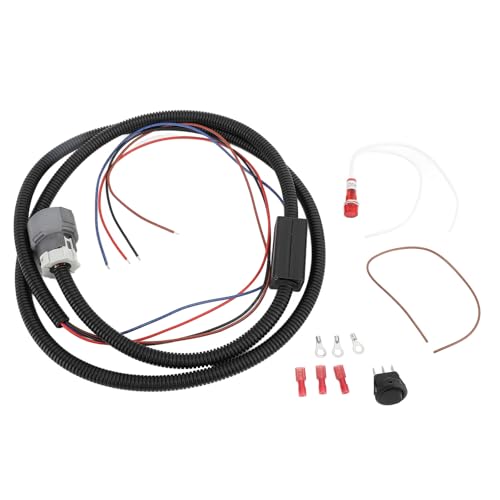 |
FiTech Go Shift Stand Alone Trans Control Unit GM
FiTech’s GO SHIFT is a compact stand-alone ECU designed to control GM 4L60/65/80/85 transmissions. The unit includes necessary harnesses for straightforward installation and aims to streamline transmission management without relying on the factory ECU. Key aspects include integrated shift control, adjustable gear ratios, and compatibility with common tire sizes for accurate performance mapping. This option suits enthusiasts seeking a modular shift solution that integrates with existing GM powertrain setups while maintaining a clean, simplified interface for tuning and diagnostics.
Nitrous Express Stand Alone Fuel Enrichment System
This system provides a stand-alone fuel enrichment solution with an external low-pressure pump and a non-bypass regulator. The 3-quart composite fuel cell fits tight spaces, and the regulator supports adjustable pressure to optimize nitrous delivery. Suitable for enthusiasts who need reliable, modular fuel management when running nitrous-packed tunes, race fuel mixes, or high-horsepower builds. The kit emphasizes controlled enrichment and compatibility with diverse fueling strategies while keeping electrical and plumbing complexity manageable.
Revolution Electronics Electric Fuel Pump Controller
The Revolution Electronics fuel pump controller primes the pump on key-on and shuts it off when the engine stops, helping prevent fuel loss. It monitors the tach signal and only allows pump operation with a valid tach input, compatible with both stock inductive and aftermarket square-wave signals. For vehicles lacking a tach signal, it can be wired to the coil’s negative side. This controller enhances safety and efficiency by ensuring fuel delivery aligns with engine activity, supporting reliable cold starts and stable idle behavior in classic and modern builds alike.
Aeromotive Controller Kit, ReturnX PWM
The Aeromotive ReturnX PWM controller kit uses a standalone MAP sensor and PWM strategy to regulate a single pump. Suitable for enthusiasts looking to implement a stand-alone fueling approach with precise fuel pressure control and reduced fuel pulsation. The kit emphasizes compatibility with standalone MAP sensing and modest wiring requirements, enabling cleaner integration into custom EFI configurations or reworked fuel systems where factory controllers are bypassed or removed.
Kuuleyn Manual Shifter Microcontroller for 4L60E
The Kuuleyn standalone controller targets 4L60E transmissions from 1993–2008 and offers both automatic and manual lock-up modes. It supports full manual shift operations with a secure auto/manual lock design to enhance driving safety. This option is appropriate for builds requiring independent transmission control, especially when upgrading or converting older systems to modern shifting performance without relying on a factory ECU.
Buying Guide: Key Considerations For Stand-Alone Fuel Controllers
- Compatibility and Scope: Confirm whether the controller supports your engine and transmission type, including specific transmission models (e.g., 4L60e) and whether it handles manual or automatic modes as needed.
- Control Method: Choose between PWM-based fuel delivery, MAP-sensor integration, and tach-based monitoring. PWM offers smooth fuel regulation; MAP sensors enable standalone fuel mapping; tach monitoring ensures fuel operation ties to engine activity.
- Ease of Installation: Look for included harnesses, wiring diagrams, and mountability in tight spaces. Some kits include complete harness sets, while others require additional components.
- Safety and Protection: Prioritize controllers with overheat, fault detection, and cut-off logic to guard against fuel-related hazards and engine damage.
- Diagnostics and Support: Availability of manuals, tech support, and documentation can reduce installation time and troubleshooting complexity.
- Scalability and Tuning: Consider future-proof features such as the ability to adjust fuel pressure ranges, gear ratios, or manual vs. automatic modes as your build evolves.
- Power Requirements and Reliability: Check voltage tolerance, fuse protection, and weather/dirt resistance for the environment where the controller will operate (garage, track, or off-road).
In selecting a stand-alone fuel controller, evaluate how each option aligns with your vehicle’s goals—whether that’s improved shifting, precise nitrous or fuel enrichment, or standalone fuel management for a high-performance setup. Compare how the device handles sensor inputs, pump control, and safety features to ensure a solution that matches your installation and maintenance preferences.