Best Cycle Work Stands for Home and Shop Maintenance
Choosing the right cycle work stand can improve bike maintenance by elevating the frame, offering 360° clamping, and providing stable support for prolonged tasks. This guide highlights five versatile stands suitable for road, mountain, and electric bikes, comparing build quality, load capacity, adjustability, and added features like magnetic tool trays. Use this overview to pick a stand that fits your workspace and maintenance habits.
| Product | Brand | Max Load | Adjustability | Key Feature |
|---|---|---|---|---|
| CXWXC Bike Repair Stand (Champagne-3) | CXWXC | 60 lbs | Height adjustable; 360° clamp | Lightweight alloy, foldable, front wheel stabilization |
| VEVOR Bike Repair Stand (4-Leg, 80 lbs) | VEVOR | 80 lbs | 42.5″–74.8″ height, 360° clamp | Heavy-duty steel, magnetic tool tray |
| BikeHand Bike Repair Stand | BIKE HAND | 55 lbs | 1m–1.5m height, rotatable head | Lightweight aluminum, portable |
| CXWXC RS100 Repair Stand (Black) | CXWXC | 60 lbs | 360° clamp, adjustable height | Tool tray with magnet |
| VEVOR 66 lb Aluminum Stand | VEVOR | 66 lbs | 40.1″–62.9″ height, 360° clamp | Magnetic tray, foldable |
Note: All stands accommodate a wide range of bicycles and are designed to support common maintenance tasks such as tire replacement, lubrication, wheel truing, and component adjustments. Height range, clamp opening, and base stability vary; consider your workspace and bike types when selecting a model.
CXWXC Bike Repair Stand Champagne-3
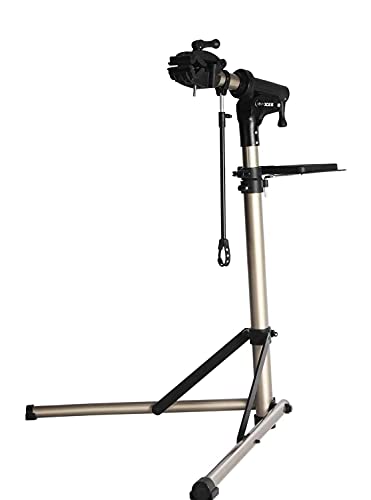
The CXWXC Champagne-3 combines a 360° rotatable clamp with adjustable height to position the bike at an ergonomic working height. Its durable alloy barrel keeps weight down while resisting corrosion, making it suitable for frequent use in home garages or small repair shops. The stand emphasizes stability with a front wheel tightening mechanism that minimizes front-end swaying while you work. A compact design supports convenient storage when not in use, and the clamp’s lever design simplifies setup for quick adjustments.
VEVOR Bike Repair Stand (4-Leg, 80 lbs)

This stand offers heavy-duty steel construction with a substantial 80-pound capacity, making it a strong option for mountain bikes, electric bikes, and aggressive frame configurations. Its four-legged base provides solid stability, especially on uneven floors, and the height can be extended from 42.5 to 74.8 inches to suit sit-down or stand-up workflows. The 360° rotating clamp features a generous opening range, and the unit includes clear guidance to fully expand before clamping to prevent mishaps during setup. It balances rugged build with practical adjustability for diverse repair tasks.
BikeHand Bike Repair Stand

The BikeHand stand emphasizes portability and light weight, constructed from aluminum alloy with a durable plastic head. It offers quick height adjustment from 39 to 59 inches, allowing comfortable work positions for different users. The rotatable head enables hands-free positioning, enabling both hands-on maintenance and easy tool access. While it supports bikes up to 55 pounds, the compact design makes it a practical choice for limited garage spaces, travel garages, or small workshops where mobility matters as much as capacity.
CXWXC RS100 Bike Repair Stand Black
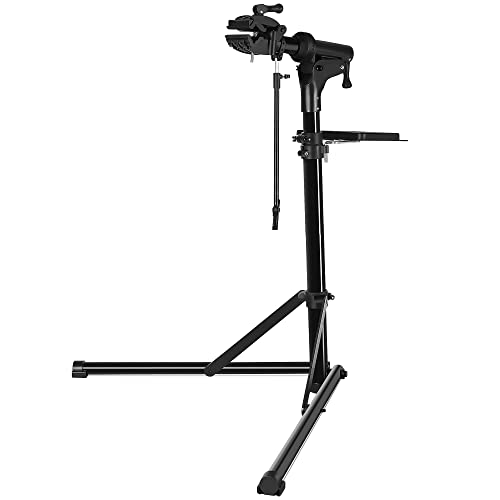
The RS100 model from CXWXC expands on the brand’s core design with a 360° rotatable clamp and a height-adjustable body. It combines a lighter, corrosion-resistant alloy with a magnetic tool tray to keep essential tools within reach. The clamp’s reliability and the arm’s rigidity help reduce movement during complex repairs, supporting efficient work on both road and mountain bikes. This stand is well-suited for home garages or hobby shops that prioritize ease of use alongside solid performance.
VEVOR 66 lb Aluminum Stand

This VEVOR model emphasizes durability and practical design with a 66-pound load capacity and a four-leg base for stable operation. Its height range from 40.1 to 62.9 inches supports a wide range of working heights suitable for standing or seated tasks. A magnetic tool tray helps organize small parts and fasteners, reducing the risk of losing components during maintenance. The folding capability adds portability for users who move between spaces or need to store the stand compactly.
Buying Guide: Key Purchase Considerations
When selecting a cycle work stand, consider these factors to align features with maintenance style and bike types:
- Load capacity: Match the stand’s max weight to your heaviest bike plus components. A higher rating provides versatility for electric bikes and downhill setups.
- Clamp design and rotation: A 360° adjustable clamp enables access from any angle, while a quick-release or lever-based clamp speeds up setup and changes during work sessions.
- Height range: Ensure the stand can reach a comfortable working height for you, whether you work seated or standing. Taller ceilings or higher workbenches may require extended ranges.
- Base stability: Four-leg bases and non-slip feet reduce movement on uneven floors. Consider your workspace surface when choosing between four-leg and single-column designs.
- Tool organization: Magnetic trays or integrated tool mounts help keep small parts within reach, improving efficiency and reducing dropped hardware.
- Portability and storage: Foldable designs and lightweight materials simplify moving between spaces and storing the stand when not in use.
- Bike compatibility: Check tube diameters, clamp opening ranges, and maximum wheelbase compatibility to ensure your bike fits securely in the stand.
- Durability and materials: Aluminum stands offer light weight and corrosion resistance, while steel stands prioritize stiffness and longevity, potentially at higher weight.
Different workflows benefit from different configurations. For home hobbyists, a lighter stand with a rotatable head and magnetic tool tray can streamline routine maintenance. For shop environments or larger bikes, a heavier-duty stand with a wide height range and robust base offers greater stability and flexibility. When evaluating options, consider how often you perform tasks like wheel truing, disk brake work, or derailleur adjustments, and choose a stand that minimizes back strain and ergonomic risk during those activities.