Best Check Engine Light Scanners for Cars: Comprehensive OBDII Tools
Modern vehicles use on-board diagnostics to monitor engine performance and emissions. A reliable check engine light scanner helps diagnose issues, read and clear codes, and monitor live data. This guide highlights five top OBD2 scanners commonly recommended for DIYers and professionals, detailing what each offers, how they handle common CEL scenarios, and what to consider when choosing. The selections balance broad vehicle compatibility, ease of use, and rich diagnostic data to support quick, informed decisions.
| Product | Brand | Key Features (at a glance) |
|---|---|---|
| ANCEL AD310 Classic Enhanced Universal OBD II Scanner | ANCEL | Reads/clears codes, live data, freeze frame, readiness, no battery needed |
| MOTOPOWER MP69033 Car OBD2 Scanner | MOTOPOWER | 9 protocols, multilingual, live data, DTC lookup, broad vehicle support |
| VDIAGTOOL VD10 OBD2 Scanner | VDIAGTOOL | Read/clear codes, freeze frame, I/M readiness, DTC definitions, basic DIY tooling |
| FOXWELL NT301 OBD2 Scanner | FOXWELL | Live data, VIN retrieval, MIL reset, general purpose diagnostic |
| BlueDriver Bluetooth Pro OBDII Scan Tool | BlueDriver | Wireless, repair reports, ABS/SRS/TPMS data, broad coverage |
Product Details
ANCEL AD310 Classic Enhanced Universal OBD II Scanner

The ANCEL AD310 is a compact, widely compatible OBD II scanner designed to identify the cause of the check engine light quickly. It supports reading and clearing diagnostic trouble codes for emissions-related systems, viewing freeze frame data, monitoring I/M readiness, and retrieving vehicle information. Its sturdy construction includes a thick, flexible 2.5-foot cable, lightweight design (about 12 ounces), and a clear display for fast results. It powers directly from the OBDII port, with no separate battery or charger required. This makes it a practical, budget-friendly choice for quick diagnostics and routine maintenance.
MOTOPOWER MP69033 Car OBD2 Scanner

The MP69033 scanner provides multi-function support with an integrated DTC lookup, reading and erasing codes, viewing freeze frames, I/M readiness, and live data graphs. It supports nine protocols compatible with most vehicles manufactured since 1996 and offers a large 2.8-inch LCD display with backlight for clear visibility. It draws power directly from the vehicle via the OBDII port, requiring no external battery. The device also supports multiple languages, increasing accessibility for a diverse user base.
VDIAGTOOL VD10 OBD2 Scanner
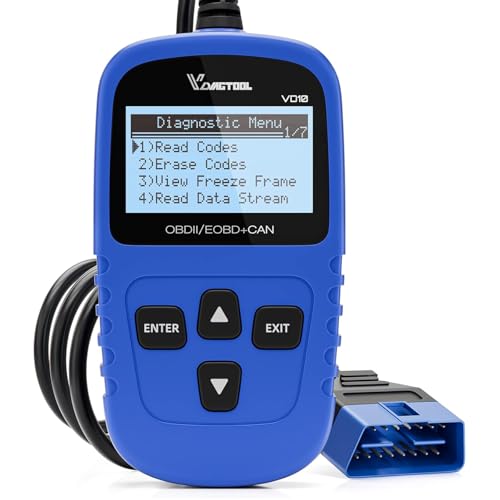
VDIAGTOOL VD10 is positioned as a must-have DIY diagnostic tool. It offers code reading and clearing, live data, freeze frame, I/M readiness, and vehicle information. The built-in DTC definitions exceed 3,000 codes, enabling rapid interpretation without external lookups. The tool emphasizes ease of use for hobbyists and car owners, enabling quick problem narrowing and basic repairs while servicing a broad range of OBDII-compatible vehicles.
FOXWELL NT301 OBD2 Scanner

FOXWELL NT301 focuses on essential CEL diagnostics and live data through a user-friendly interface. It supports reading DTCs, checking emissions readiness, turning off CEL, resetting monitors, and retrieving VIN data. Live data graphing helps users visualize sensor trends, making it a practical choice for routine maintenance. Note that NT301 is designed for standard OBDII scanning and does not cover ABS or SRS systems, so it’s best suited for general engine and emissions diagnostics.
BlueDriver Bluetooth Pro OBDII Scan Tool
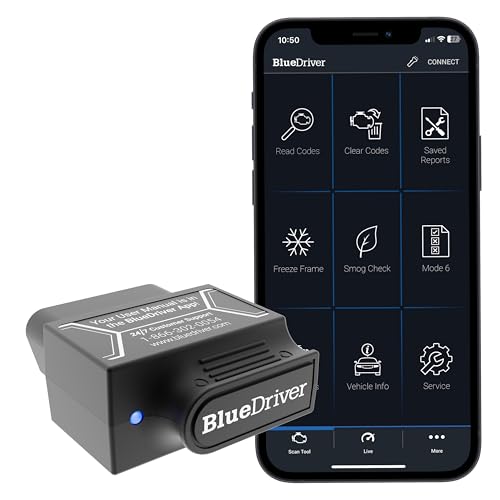
BlueDriver is a wireless OBDII scanner that pairs with iOS and Android devices. It reads and clears trouble codes, supports ABS, SRS, and TPMS, and provides repair reports with possible causes and fixes. The live data and vehicle health monitoring features extend beyond basic code reading, offering a more comprehensive diagnostic view. A subscription is not required to access core features, making BlueDriver a strong option for ongoing vehicle maintenance and proactive diagnostics.
Buying Guide: Key Considerations When Selecting a Check Engine Light Scanner
When choosing a check engine light scanner, several factors influence long-term value and usefulness. These considerations help balance budget, vehicle compatibility, and the depth of diagnostics you need for your situation.
- Vehicle compatibility and protocols: Ensure the device supports the OBDII protocol and the vehicle makes you work with. Most US-based cars from 1996 onward are supported, but some vehicles require CAN or additional proprietary features.
- Code reading and clearing capabilities: Look for devices that read generic and manufacturer-specific codes, clear trouble codes, and provide definitions. Some scanners also support live data, freeze frame, and I/M readiness checks.
- Live data and data presentation: Real-time data can help diagnose intermittent issues. A device with a clear display or a companion app with graphs improves usability.
- Display and interface: Sunlight-readable screens, backlighting, and simple menus reduce friction during roadside diagnostics. Language support can be important for non-English users.
- Power and connectivity: Standalone scanners draw power from the vehicle, while wireless options rely on a connected smartphone or tablet. Battery-free designs reduce clutter and maintenance concerns.
- Updateability and database size: Built-in DTC libraries vary widely. A larger library reduces the need for online lookups and improves accuracy for uncommon codes.
- Special features: Some tools offer VIN retrieval, improvements in EVAP testing, O2 sensor checks, EVAP leaks tests, and repair guidance. Decide which extras matter to you.
- Intended user: Basic code readers suit casual users focused on a quick check, while professional-grade tools offer deeper data and broader system diagnostics.
The right scanner should provide clear code definitions, robust live data, and straightforward operation. It’s helpful to consider future needs, such as expanding to more vehicles or pursuing more detailed repair guidance, to maximize the value of your purchase over time.