Best Check Engine Light Code Reader: Top OBD2 Scanners for 2026
Discover dependable OBD2 scanners that quickly read and clear check engine codes, view live data, and help keep your vehicle in top condition. This guide focuses on popular, reliable models that work with most 1996 and newer cars in the US, EU, and Asia. Learn what each tool does, how easy they are to use, and which features matter most for DIYers and professional mechanics alike.
Summary of selected products:
- ANCEL AD310 Classic Enhanced Universal OBD II Scanner
- VDIAGTOOL VD10 OBD2 Scanner
- MOTOPOWER MP69033 Car OBD2 Scanner
- ANCEL AD410 Enhanced OBD2 Scanner
- BlueDriver Bluetooth Pro OBDII Scan Tool
| Product | Key Benefit | What It Measures | Ease of Use |
|---|---|---|---|
| ANCEL AD310 | Compact, reliable CEL reading and clearing | Emissions, live data, freeze frame | Very Easy |
| VDIAGTOOL VD10 | Budget-friendly DIY diagnostics | Codes, I/M readiness, DTC definitions | Very Easy |
| MOTOPOWER MP69033 | Wide protocol support | All OBDII vehicles, live data, graphs | Moderate |
| ANCEL AD410 | Enhanced diagnostics with EVAP and MIL support | Fault codes, O2/EVAP tests | Easy |
| BlueDriver | Professional-grade insights without a monthly fee | Codes, live data, repair reports | Moderate |
ANCEL AD310 Classic Enhanced Universal OBD II Scanner

The ANCEL AD310 is a compact, 12-ounce OBD2 scanner designed to quickly determine the cause of a check engine light. It reads and clears diagnostic trouble codes from the emission system and offers live data, freeze frame, I/M readiness, and vehicle information. The device uses the vehicle’s OBDII port for power, so no extra batteries are required. Its sturdy build and clearly labeled buttons help users work efficiently in confined spaces, such as under the dashboard. This model is widely recommended by automotive enthusiasts for straightforward, reliable diagnostics.
VDIAGTOOL VD10 OBD2 Scanner
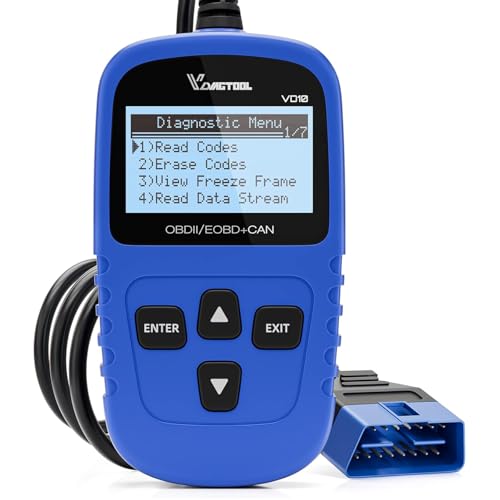
The VDIAGTOOL VD10 is designed for DIY enthusiasts and casual users. It attaches directly to the OBDII port and provides quick readouts of diagnostic trouble codes, live data, I/M readiness, and vehicle information. It features a built-in database with thousands of codes, enabling users to look up definitions on-screen. The VD10 emphasizes simplicity and speed, helping you identify fault sources without internet searches. It’s an approachable option for those wanting reliable diagnostics without complexity.
MOTOPOWER MP69033 Car OBD2 Scanner

The MOTOPOWER MP69033 offers broad compatibility with most OBDII vehicles since 1996, including US, EU, and Asian models. The scanner provides a rich feature set: read and erase codes, view freeze frame, check I/M readiness, display real-time data, and output engine-related metrics such as speed, coolant temperature, and RPM. Its large 2.8-inch display with backlight enhances readability, making it useful for technicians and DIYers who need quick, actionable insights in any lighting condition. It draws power directly from the vehicle, eliminating the need for batteries or chargers.
ANCEL AD410 Enhanced OBD2 Scanner

The AD410 Enhanced OBD2 Scanner adds broader functionality for engine diagnostics, including quick reading and clearing of fault codes, MIL monitoring, and enhanced diagnostic tests like O2 sensor readings and EVAP testing. It’s designed for 1996+ vehicles and promises rapid identification of issues with an emphasis on core engine performance rather than multi-system coverage. While it excels at engine-focused diagnostics, it does not support ABS, SRS, or certain transmission subsystems, so buyers should match this tool to their intended scope of use.
BlueDriver Bluetooth Pro OBDII Scan Tool
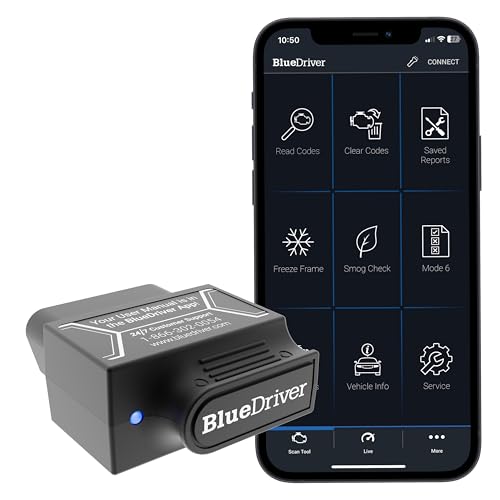
BlueDriver is a Bluetooth-based OBDII scanner compatible with iPhone and Android devices. It provides code reading and clearing, plus extensive functionality such as ABS, SRS, TPMS codes, and repair guidance through unlimited repair reports. The tool offers real-time health monitoring and data logging, which helps users track vehicle trends over time. A subscription-free model, it appeals to drivers seeking a robust, mobile-first diagnostics solution with professional-grade insights.
Buying Guide: Key Considerations for Choosing a Check Engine Light Code Reader
- Vehicle compatibility: Ensure the tool covers all the protocols your vehicle uses (OBDII, CAN, KWP2000, ISO9141, etc.).
- Code reading and clearing: Look for devices that read generic and manufacturer-specific codes and can clear codes after repairs.
- Live data and freeze frame: Real-time sensor data helps diagnose issues more accurately; freeze frame data can capture engine state at the time of a fault.
- I/M readiness: A feature that shows readiness for emissions testing is valuable for pre-test preparation.
- Display and ease of use: A clear screen (preferably with backlight) and a straightforward interface save time, especially for DIYers.
- Battery and power: Some tools draw power from the vehicle, avoiding the need for batteries; others may require external power.
- Battery and EVAP testing: Certain models offer battery health checks or EVAP system testing, which can prevent misdiagnoses.
- Multilingual and database size: A larger built-in code database improves code definitions lookup and reduces online searching.
- Form factor and durability: Compact, sturdy devices with well-spaced buttons withstand on-road use and workshop environments.
- Value and updates: Consider whether the tool includes ongoing updates or repair guidance that adds long-term value.
The right check engine light code reader balances vehicle compatibility, diagnostic depth, and ease of use. For hobbyists, entry-level models that read and clear codes with basic live data are often sufficient. For DIY enthusiasts and professionals, tools with expansive code databases, live data visualization, and repair insights provide a stronger return on investment. Compatibility with the user’s smartphone ecosystem (where applicable) can also influence day-to-day convenience and workflow.